For this unit I wanted to delve into creating music as an artist, without the impact of the industry. One of my aims in life is to live and breathe art and this section focuses on the unbridled creativity of all the different types artists tha come together to create the music sphere.
This perspective is split into 6 sections each with their own research and outcome
- Songwriting
- Instruments
- Singing
- Rap
- Production
- DJing

Music Through History
Aboriginal Australian people believe the world was created through song, during a sacred ancient era called the Dreamtimes, where ancestral beings traversed the lands singing their features into existence. They called these songs the Songlines. Through these is where these people got their history, learn about the world and how to traverse it.
Music throughout human history has always been used for cultural and spiritual expression, been used in rituals and storytelling, and bonded communities across all time in all civilisations as well as letting people explore themselves and their identity at an interpersonal level.
Before music was experienced the way we do today: as an entire industry, structued art form and form of entertainment and pop culture distributed via physical and electronic mediums, it was a way to pass down stories and information and a way to bond with others, often passed down from generation to generation in a spiritual/religious context and inform peoples identities.
Before modern instruments people used their voices to chant, hum, sing and imitate the sounds that they heard in nature. Body percussion was used to create rhythm and beats and could have been used to coordinate group tasks like rowing and are often seen to be part of ceremonial dances. Natural objects such as sticks, bones, hollow logs and shells were used to tap and eventually create instrumens. The oldest ever instrument found is a bone flute dated to be around 40,000 years old!
Cave paintings show the Neanderthals had a level of artistic sophistication

“Singing probably appeared before speech… it may have been used for bonding long before humans could talk” — Steven Mithen, The Singing Neanderthals (2005)
By the time that music had evolved to involve instruments and notation, so had our society. Instead of a tool for survival it became a tool of expression. Medieval minstrels and trabadours would perform in different venues from inns, taverns to town squares and share their are and entertain both common folk and nobility. These songs were often versions of songs that had been passed down through generations, or writted by these performers themselves or in collaboration with others.
Creating Music Today
Songwriting
Songwriting is the act or process of writing the music and words of songs; The creative birth of music, where feelings and ideas are molded into something tangible. It is both emotional and technical, combining rhyme, rhythm, and storytelling
Historically songwriting has always reflected the times and tools of the artists, wether we’re talking about neanderthal chants, old religious hymns or modern pop ballads – it has always been a peek into the era and inspirations of artists.
I believe art is a conversation between you and all the artists that lived before you. Writing music has always been a part of my life and is incredibly personal to me. It’s how I process my feelings, explore big ideas and express the things I couldn’t easily say aloud. For my Final Outcome I co-wrote a song with my classmate Rita called “Call You Up”, which represents the attitude I have taken on with this project of looking at creating music from different lenses. When I wrote this song I was specifically thinking about how well it could sell, something I never really think about when creating music.
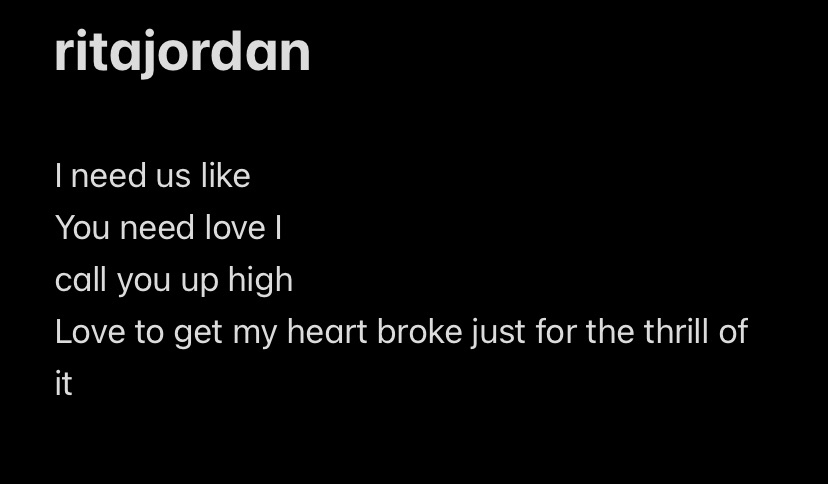
Call You Up first started earlier in the year when I walked into the main studio and found Jordan and Rita struggling to come up with lyrics for a beat Jordan had created. When I heard the beat these lyrics and melody came to my head instantly and after Rita changed one of the lyrics (“call you up, why?” became “call you up high”, which in my opinion is stronger anyway) we had a great start for the song.
We excitedly discussed the storyline for the song, for example how both me and Rita could get on it from two perspectives of one relationship, and made small tweaks to lyrics so they flow better with the melody.
Call You Up – Voice Note Demo
↓↓↓ Click here to see how I took Call You Up from a fun idea created by jamming with friends to a track complete with cover and marketing plan.↓↓↓
Instruments
Instruments have been at the heart of musical expression for centures. Instruments are not merely vehicles for music but extensions of artists themselves. They can turn abstract feelings and ideas into tangible sounds, giving us musicians a way to communicate without words.
For many people, building the skill to learn an instrument is an intimate process. I put it off for so long with fear that I won’t be good enough. It scared me and scratched at my ego as an artist. I decided to document how my practice went for three weeks until I got happy with how I played the song.
| Week One | Week Two | Week Three |
| Day 1-2 – Actively listening to New Gods multiple times both with and without lyrics.Found tabs on Ultimate Guitar, practised finger placements | Day 8-10 – Practiced full verse sections with strumming pattern, looped problem areas | Day 15-16 – Playing through the full song at maybe 80 or 90 percent of the original speed |
| Day 3-4 – Practiced each chord shape isolated and once I was happy with it learned to switch from one to the next | Day 11-12 – Kept practising transitions between chords with the strumming pattern | Day 17-18 – Recorded a rough version and reviewed what needed polishing, kept practising |
| Day 5-7 Practised switching between chords with a much slower tempo | Day 13-14 – Played along to a slowed down version of the track | Day 20 – Recorded the final version for the website |
✧・゚: *✧・゚:*
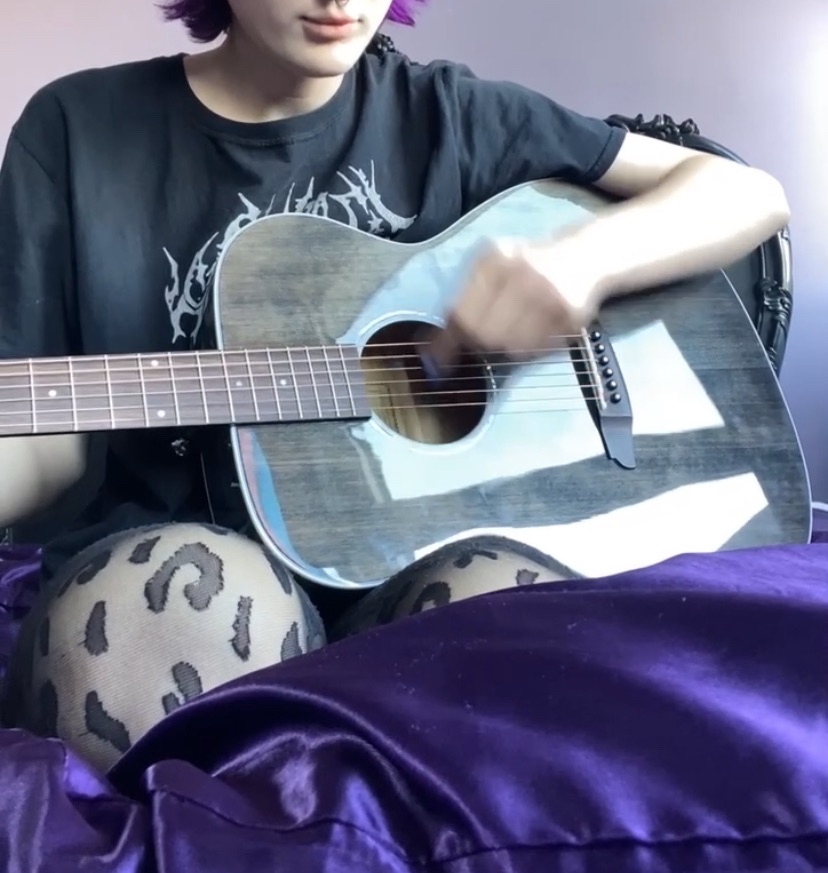
I’ve always seen myself as more of a singer and performer than a musician. Learning to play the guitar was unfamiliar and intimidating, having to confront my fear of failure felt like would expose a weakness in my artistic identity.
But as I put in the work with each practice my view shifted. It felt less about perferction and more about my connection to the instrument and my music. Every frustration I overcame felt like shedding a layer of self doubt. By the final week I felt like I wasn’t just playing the song but really breathing life and my artistic essence into it.
I learned that learning to play an instrument wasn’t about just mastering a skill at all, but my connection with the instrument and myself and facing the part of ne that wanted to give up. In pushing through the anger and doubt I grew as a person and musician and gave myself the space to be imperfect.
“The voice is the most personal instrument there is” — Björk
Singing
Singing is the oldest and most universal form of musical expression. It doesn’t need any gear, plugins or instruments other than the voice and the body. For me, singing isn’t just about hitting the right notes; it’s about storytelling, the thread you hold between yourself and the audience, being vulnerable and emotionally honest. In my opinion it’s one of the most personal and exposing things you can do on stage. “the voice is the audible expression of the self,” -Diane Austin.
Singing has always been my element. Ever since I’ve been small I’ve been singing, my most natural form of expression and existence and, because of this my progression to any free choir and musical theatre programmes came natural. During my time at the course singing is what I spent most of my time doing. Whether this was rehearsing for an upcoming concert, writing with friends or just singing everyday to keep the muscles in practise.
Research in psychology and ethnomusicology supports the theory that singing can be a deep emotional release and allow you to explore your identity. Neuroscientist Aniruddh D. Patel released a study that says singing, especially in expressive styles, engages brain regions linked to emotion, memory, and empathy. I relate to his findings in my own personal experience of growing more confident in using my own voice, not just as a technical instrument but as a way to express my feelings and bear them to a crowd in a way I could never do by just focusing on technical precision.
A week before I was set to perform “New Gods” by Grimes at my colleges winter concert I got the news that my friend had died by suicide. This news shattered me and performing a song as deeply emotional and haunting as New Gods felt like a huge challenge. As a performer, I knew that this would be a great release of emotion, but after the performance was finished it didn’t feel correct. The large production with lights, fancy clothes, digital effects and highly reverbed bass and piano felt like it focused more on aesthetic and precision than my feelings. I felt as though I was performing for the crowd rather than for myself, which came at a time for me where my grief was so fresh that it didn’t feel authentic.
A few months later, during the FMP era I revisited the song in a completely different context. I performed the song impromptu and a capella at an open mic at a protest for trans rights. The grief I had been feeling since my friends passing had become more complex and that day I was missing his presence a lot. He was an incredible activist who knew how to verbalise his thoughts in a way I never could, the only way I knew how to express my feelings as eloquently as he could was through singing.
Singing New Gods again, no instrumental support, just my raw voice, changed my perspective completely. The performance that once felt ethereal now felt human and exposed. My aim wasn’t perfection anymore; it was honesty. I let the cracks in my voice, the silence between the lines, speak. Grief had changed my relationship to this song, a song that was once about otherwordly change now felt grounded in real-life emotion and memory.
Looking back at these two performances of the same song I think it reflects on my growth, not just as a singer, but as a person. The version I showcased at the concert was polished and confident(as practised), but emotionally distant. The open mic performance was stripped down and vulnerable, rooted in personal loss. Both expressions were valid, and the first definitely made for a more captivating performance, but the second taught me that singing doesn’t need to be “perfect” to be powerful.
Using Gibbs’ Reflective Cycle I learned how emotions can transform a performance. Singing a capella with no rehearsal felt exposing, but also made me more connected to the audience, lyrics and myself. Singing has given me a way to process my grief through music. I come away from this section with the knowledge that singing is not just a tool for performance, but for healing.
Rapping
Singing is the oldest and most universal form of musical expression. It doesn’t need any gear, plugins or instruments other than the voice and the body. For me, singing isn’t just about hitting the right notes; it’s about storytelling, the thread you hold between yourself and the audience, being vulnerable and emotionally honest. In my opinion it’s one of the most personal and exposing things you can do on stage. “the voice is the audible expression of the self,” -Diane Austin.
Stomping down the street
In my big c*nty boots
With my girlies, we’re the baddest
Staying spooky, these my boos
You don’t see this on the daily
We’re like Harajuku cute
Bloodsucking Freaks got a craving for the lewd
You’re dealing with the baddest so you better not bother
Your a*s gone be grass like a lamb to the slaughter
Bite you by the neck, bulldog to chihuahua
Ma kref sama polska, little miss Warszawa
I shoot up my mones so I’m calling the shots
He know what he like and he like me a lot
I’m little miss perfect, cross the T, I on the dot
A*s fat, clap back, I know just the spot
Chew off your uh, then I’ll rip your face off
Shove you in the over like great british bake off
Waist so slim, reads so shady
You can call me transfeminem baby
Production
Production is…
Exploring music through the lens of the artist was by far the most personal and revealing part of doing this unit and my FMP. Each section allowed me to wear a new hat -historian, songwriter, performer, rapper, DJ, and others- but under every hat was a unifying thread: artistic expression as a form of truth-telling. When I started this project I was driven by the desire to create for the sake of creation itself without the constant stare and shaping hand of the commercial industry. I wanted to live and breathe music in all its forms and I’ve learned that the artists perspective is one of constant reinvention, vulnerability and resilience.
DJing
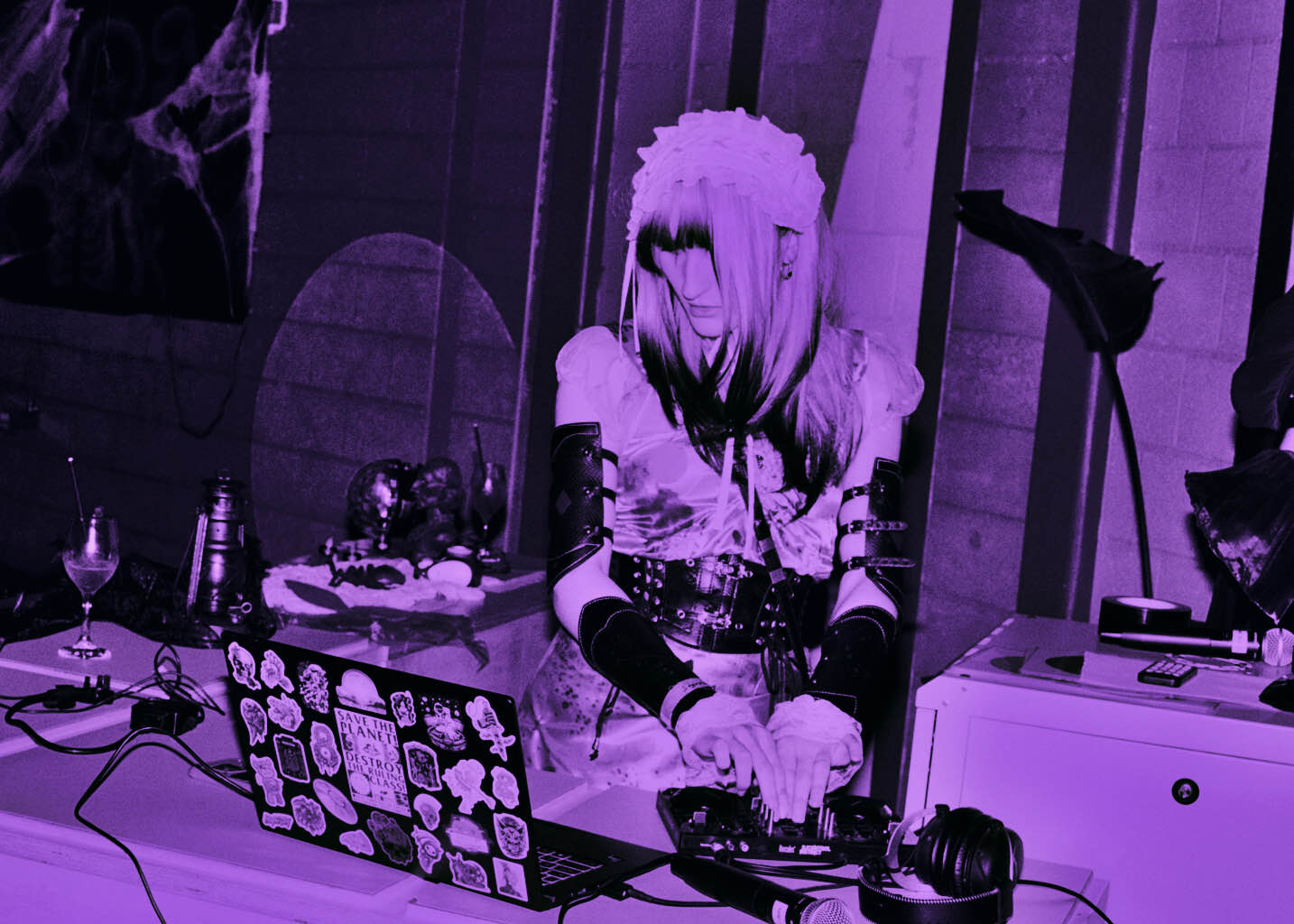
DJing is a unique musical skill that mixes technicality, creativity, and most importantly crowd awareness. DJs are not just people who play music, they curate the vibe of a space in real time through their storytelling and live mixing. DJings history goes back to the early 20th century to radio presenters and dance hall selectors, but it really carved its space as a performance art in the 1970s.
Conclusion
Exploring music through the lens of the artist was by far the most personal and revealing part of doing this unit and my FMP. Each section allowed me to wear a new hat -historian, songwriter, performer, rapper, DJ, and others- but under every hat was a unifying thread: artistic expression as a form of truth-telling. When I started this project I was driven by the desire to create for the sake of creation itself without the constant stare and shaping hand of the commercial industry. I wanted to live and breathe music in all its forms and I’ve learned that the artists perspective is one of constant reinvention, vulnerability and resilience.
In each section -wether mapping music’s sacred beginnings with the Aboriginal Songlines or learning my Grimes guitar cover- I learned that making music is as much as it is about skill as it is about knowing yourself. Creating “Call You Up” with my classmates was a lesson in walking the line between authenticity and commercial gaze. My reiteration of Grimes’ “New Gods” taught me how music evolved with you as your life and feelings grow. Rapping, DJing and producing all opened up new avenues for me to think about and engage with music creation. I’ve learned that artistic identity is fluid and built from layers of experience, collaboration, loss, growth, happiness, insctint and everything inbetween.
Ultimately, this unit reminded me that being an artist isn’t about producing a flawless product. It’s about being brave enough to create something true. Whether I’m screaming into a mic, freestyling from the gut, whisper-singing words at a rally or mixing beats for a crowd of cosplayers I recognise now that artistry isn’t about perfection, it’s about presence. These experiences and opportunities were invaluable and gave me the tools to continute to grow as a person and persona, wherever music may take me.
psst… press me at any time to return to the home page
 sigourneymusic.com